
Bruce Reyes-Chow: Across Generations & Borders
Healing Conversations from the Front Lines of Activism

Dear Friends, in these harrowing times, I greet you with a deep breath and prayers for peace. This month’s conversation is with Bruce Reyes-Chow, an activist and pastor with a true heart for justice. My only regret is that in editing this piece for length, it loses his marvelous sense of humor! Bruce is a person of depth, commitment, and wit.
I also want to invite you to join me on zoom, Friday, April 24th at 12pm PT when I will be giving the Center for Multi-Religious Studies Annual Lecture (and discussion), on the subjects of my book, Soul Medicine for a Fractured World: Healing, Justice, and the Path of Wholeness. Info & free registration: tinyurl.com/CMRS-soul.
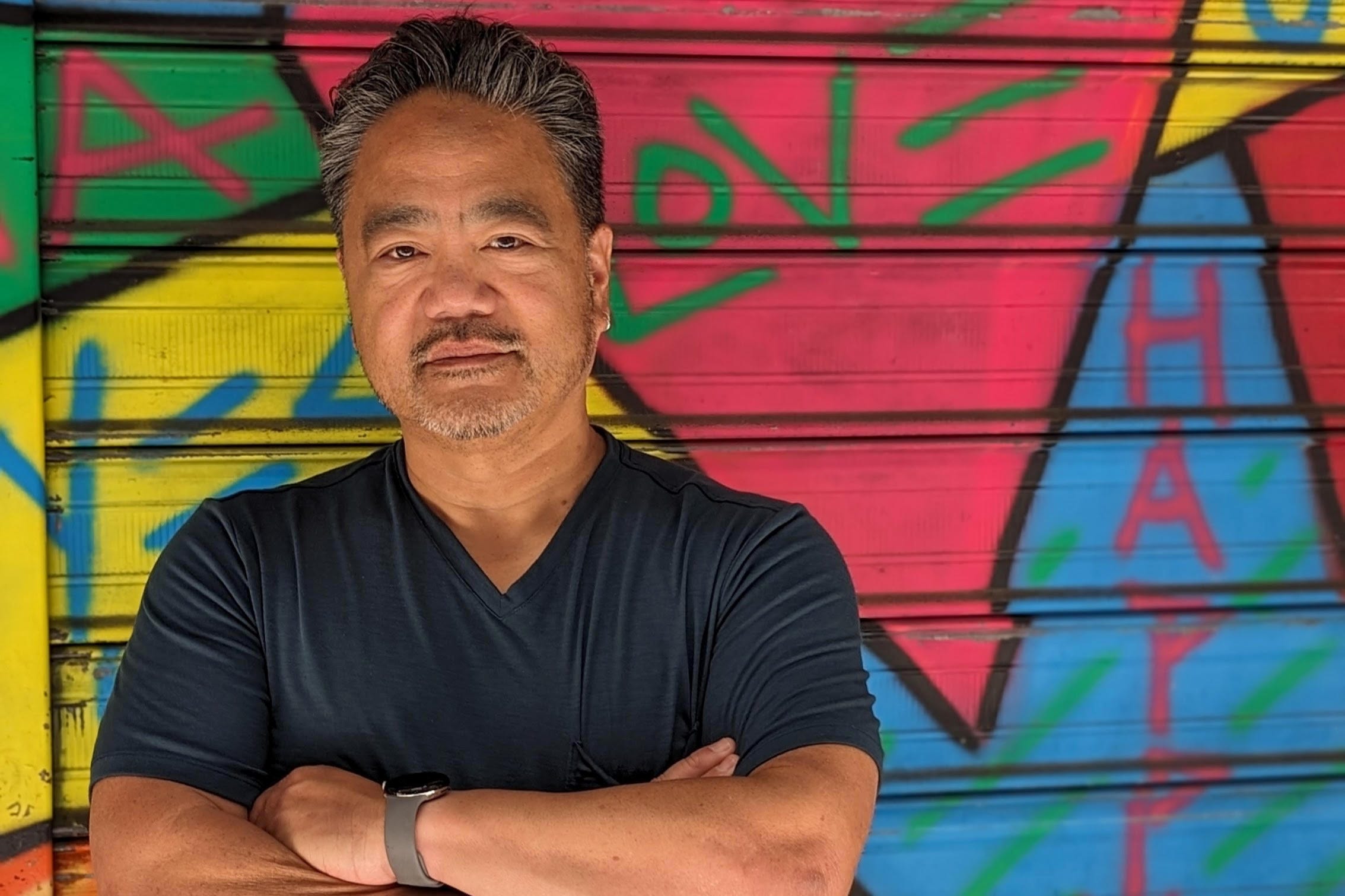
Bruce Reyes-Chow is a 3rd generation, GenX, Filipino/Chinese American and a speaker, writer, coach, and podcaster. His topics include faith, leadership, activism, culture, race, and technology. An ordained minister in the Presbyterian Church (USA), he is also a longtime activist, working on immigration justice, decarceration, and Palestinian liberation.
Bruce is the author of seven books, including In Defense of Kindness (2021), Everything Good about God is True (2024), and the forthcoming, Prophets, Priests, Pastors & Poets (2026). He is an active commentator on contemporary issues via social media and through his newsletter and podcast, The Amalgamation.
We sat down for this, our first conversation, after being introduced by a mutual friend. Bruce had just returned from leading a trip to Palestine—more about that later. After getting to know one another a bit, I ask his response to the title of this blog, Healing Conversations from the Front Lines of Activism.
“It resonates with me,” he replies. “When I think about front lines, I actually think it’s a very healing space. Because most of the times that I’m in those places, we’re modeling what it means to be community together. Activism for me is about the deepest way we express humanity to ourselves and to the people that we’re encouraging to see humanity in us. It’s not just healing for us, it’s healing for the people that we’re challenging to see the world differently.”
Bruce reflects on how his activism has shifted throughout different seasons of his life. “You know, I’ve probably never seen a protest that I didn’t want to go to at a certain level. My home church was founded out of the farm worker strikes in the Central Valley, so I have deep roots in activist community organizing. It’s in my blood—out of my heritage as Filipino. That was always part of who I’ve been.”
In younger years, he was more aggressive in his protest activity. Then, when his children were growing up, he couldn’t risk as much and focused on working for change within the institutions and systems he was part of. Now that his children are grown, he and his wife are back out in the streets, willing to risk arrest and possible jail time. He says, “With the state of our country right now, I’m telling people don’t go to civil disobedience actions unless they actually can serve time. I mean, we don’t know at this point if it’s just going to be catch and release.”
I ask Bruce if he has a story about a time he experienced healing in the course of his activism. Many, he tells me. Bruce and I know one another through our esteemed friend, Rev. Deborah Lee, director of the organization Interfaith Movement for Human Integrity. (You can read my interview with her for this blog here).
“Deborah is one of those people that if she asks me to be somewhere, I don’t need to know why, I will go. I think she’s that for a lot of people. And that’s not blind commitment. That’s because I trust that she knows where people need to be when, and I trust her,” Bruce affirms.
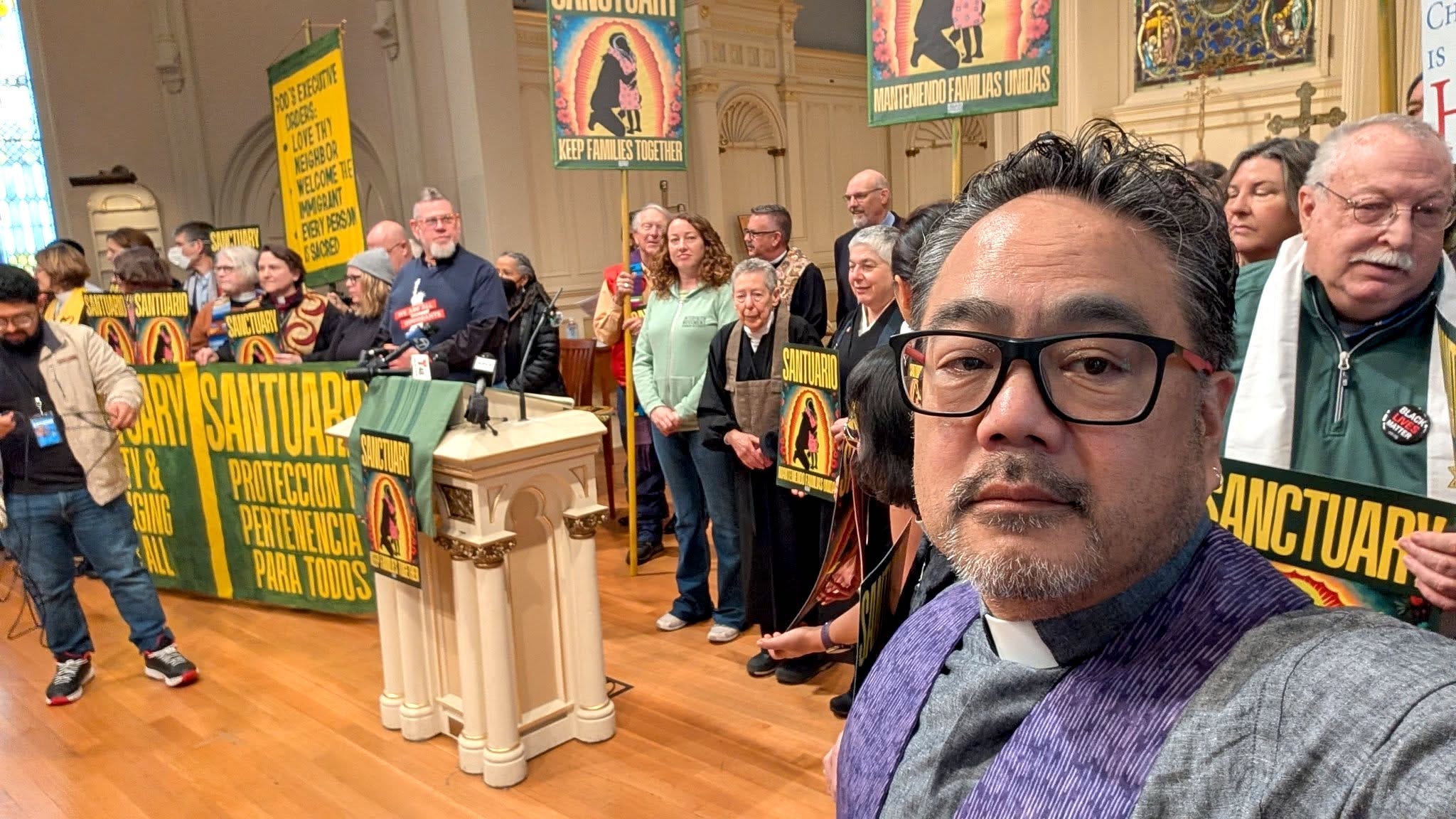
He recounts a particular action at the US-Mexico border Deborah asked him to participate in, and how every aspect of it was healing in some way. “The training in nonviolent civil disobedience,” he explains, “is not just about the tactical pieces of what you do or don’t do. It’s about learning how to be in community with those who you are going through this with. Getting to know who you’re engaged with is part of being in solidarity with one another. Then, as we’re engaging in an action, we’re standing before other human beings, trying to force them through their darkened visors, to see us as human beings, to make them choose a different path.
“And so that training is healing. Standing together and walking towards a thing is healing. Praying together is healing. Locking arms is healing. Kneeling before folks. Staring into somebody’s darkened visor without hatred, and truly believing that they have a choice about whether they’re going to follow the orders. And having some fear, certainly, knowing that under this administration we have no idea what they’re going to do. I think knowing that there are people on both sides of us and that we’re going to watch out for each other—those are healing things.”
He adds, “To show, here’s what it means to be humanity together. And in the face of oppression and terror, we can do something different. When we do that, I think we heal ourselves and we try to show others that this could be a healing presence. We try to tell these folks who are enacting these things: ‘You, too, have a different choice that you can make.’ And we hope we plant seeds for those folks. That someday, somewhere, in their sleep or in the choices they make, they’re going to remember there were people that showed them a different way.”
I’m moved by scene he describes, and the intent behind it. It’s an embodied example of one of the points that I lift up in my book. “That’s beautiful, Bruce. And the piece about belonging to a greater whole, especially in a culture that dominates through atomization . . . The power of both the lived experience of that connection, and then as you say, trying to extend the invitation of that to people who have been conditioned by the state to ignore it, to deny it, to break it . . .”
He nods, “And just to say that we refuse to let that win the day. Even those whose policies, beliefs, ideals, whatever, I disagree with are still human. I’ll never give that up. I know there are people that can’t get there, but I think if we lose that, then evil wins. We allow it to win. There have been times in my life where I’ve let that happen, and I don’t have enough energy or years of my life left to allow that to happen anymore.”
Given the longevity and intensity of his activism, I’m curious what inspires Bruce to do the work he does, and what gives him hope. “What inspires me is the people before me who did it. Not just my immediate family, but all the people in that generation—my grandparents’ generation and before—who came to the United States. And even before that. I know a little bit about what happened in the Philippines, and a little bit in China, but their activity in the Philippines included deep roots working with farmers. They were accused of being, and probably were communists in the Philippines, and were very active with the people there. And when they came over here, they were active in the farm workers unions and all that. So I feel a responsibility—in a positive way—an obligation to continue that work.”
Bruce points out how this lineage is important not only to him, now, but to younger generations. His three young adult children are each involved in their own forms of activism.
“I think it’s important if you want the world to be a better place, to create the environment where the children around us see that activism is a viable, safe, nurturing path to take. And find joy in it. And find people around them who will be the aunties and uncles, and all that, who are going to help foster that space. That’s always been how we raised our kids and the kids around us.”
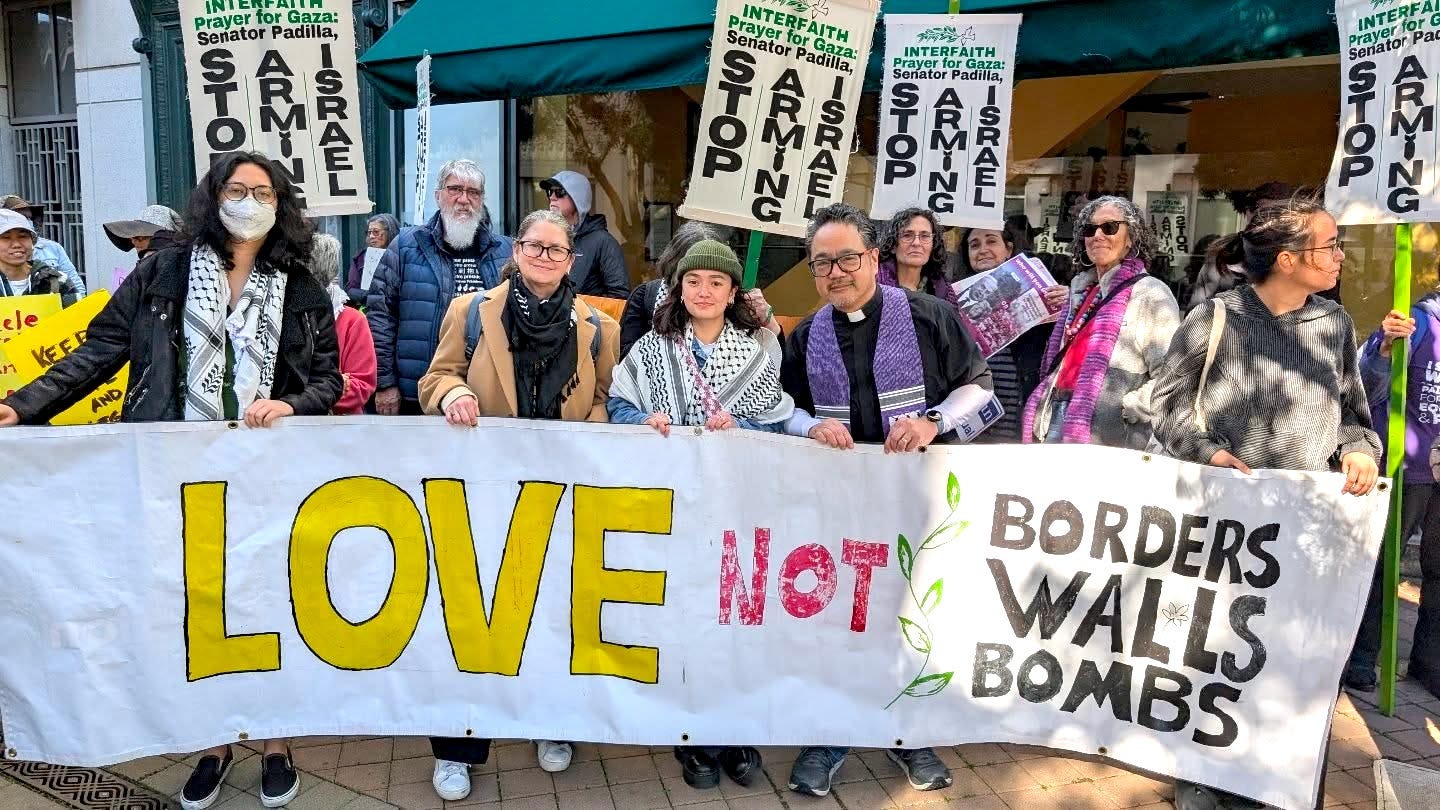
He recalls the principle from Haudenosaunee and other Indigenous peoples to live mindful of those who will come seven generations in the future, and describes a practice he engaged in at a staff and board retreat for the Interfaith Movement for Human Integrity. Participants were invited to write a letter to themselves from a future descendant. (Perhaps it’s an exercise you might also want to try?) Bruce wrote a letter from his imagined great, great, great, great grandchild, named Cruz.
“I think of that letter a lot,” he smiles. “It reminds me there’s a reason I do this, because I do believe it makes a difference. That as terrible as things get, as much as humanity can mess things up, things can happen that are good beyond what I can imagine. And so we keep working towards that.”
I ask Bruce if he’d be willing to share part of that letter. “Yeah,” he nods, “but I probably can’t read it without crying.” He does a quick search on his computer to find it. “So, Cruz is a gender-neutral name. I don’t actually say whether it’s a boy or girl, but it starts with, basically, they are telling me that they’re in the same place that I am standing at that moment, at a retreat in the Santa Cruz mountains, where I wrote this. And that they’re thinking about the work that we were doing there, and that they are continuing.” Bruce reads from the letter:
We are here continuing the work that you and many others did before us. While there is still much to do, much has been achieved since you and your compadres left this earth. I’m writing to you today because we were tasked with writing a letter to our ancestors as we reflect on the state of the world and our lives—so to you, this day, I say thank you.
Thank you for dreaming about the possible when the— Bruce’s voice quavers as emotions rise, he clears his throat —when the politics of the day seemed to dismiss endeavors of justice as impossible.
Thank you for screaming, chanting, and organizing in direct disobedience of systems that tried to shame you into silence.
Thank you for embodying hope, new life, and the resurrection in direct resistance to the pressures to let despair, stagnation, and death have the final word.
Because of you and the ancestors and saints with whom you endeavored, seven generations later, the world is indeed a better place:
We no longer incarcerate our siblings into invisibility.
National borders have transformed into pathways for the exchange of culture, community, and mutual thriving.
Militarism and policing are no longer the primary means of dealing with conflict and safety.
Each member of the Body Politic contributes their fair share and is committed to pursuing the common good for all.
Building wealth is no longer the main objective of learning and life.
Joy and flourishing are assumed pursuits of life and work.
Housing and shelter are available to all who desire it.
Healthcare is a given for everyone.
Technology has been harnessed for good.
Mass shootings are a thing of the past.
Food is distributed equitably.
Creation is thriving again.
I feel known, seen, and loved.
Above all, thank you for staying true to you:
true to the ancestors before you;
true to the communities that mattered most to you;
true to me, your unknown descendant, and your commitment to make the world a better place;
And true to God’s hopes and intentions for your life and being.
“And then there’s some more. So there you go. . . I’ll send a link to you.”
“Thank you,” I say gently.
“Yeah. Thank you for asking me to read it.”
“One of my questions was going to be, ‘what is the vision you’re working toward,’ but I think Cruz answered it.” We’re quiet, still feeling the reverberations of the letter.
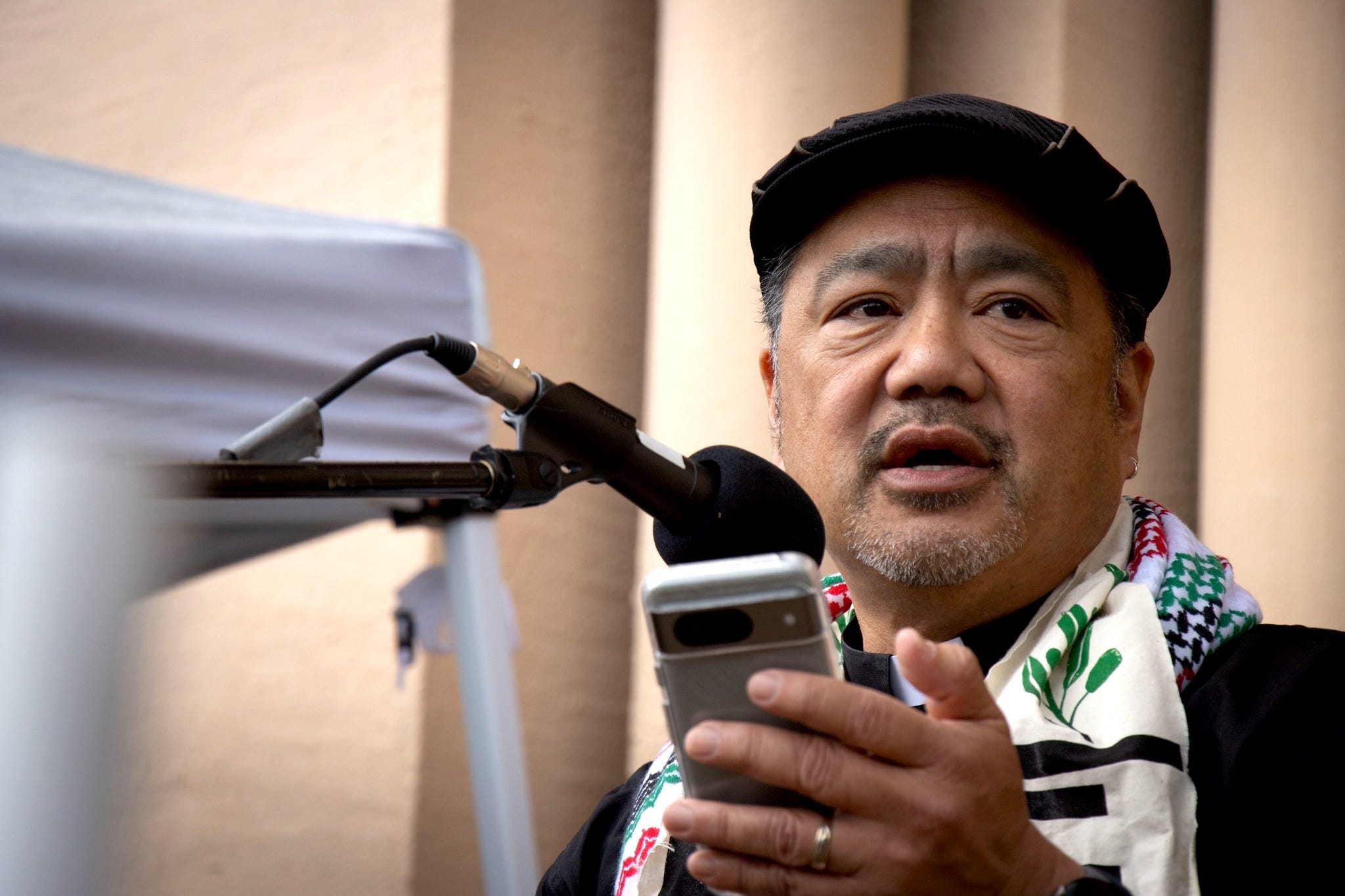
As we near the end of our time together, I ask Bruce to tell me about his work in Palestine, something he had mentioned earlier, as one of the sources of his hope.
Bruce has worked with the Palestinian Christian liberation organization Sabeel for over a decade, and began leading delegations in partnership with them after October 7, 2023. He has led five trips to date. He describes it as a kind of “resistance tourism,” distinct from what he calls the “Disney-i-facation” of Christian Zionist tours of the holy sites.
The trip is an opportunity to witness both the horrors and the beauty of life in the West Bank and East Jerusalem. To meet the Palestinian people and learn about their culture, discover their stories and their strength. To support the local economy through much-needed tourism dollars. And then, upon returning home, to do advocacy through meetings, presentations, and political action.
“Going changes one’s perspective,” Bruce explains. “If there’s any doubt about what’s happening, it’s completely gone. Palestinians are living under an apartheid state. There’s no longer any question about it. And I think that’s the thing more people need to understand: that this is not a debate.” He pauses, “The theme for the trips is always come and see, go and tell. We’re shifting it to come and see, go and tell, go and do, go and act. But, you know, it’s basically do all the things you can after you’ve seen.”
One of the questions that participants often ask their Palestinian hosts is how—in the face of such overwhelming assault—they are able to persevere, and even to find hope. Bruce looks at me, “And they would answer with something like, ‘Well, we’ve outlasted empires before.’ Somebody told us the last time we were there, ‘This is where empire comes to die.’ I was like, wow.
“And I think about that all the time. If Palestinians right now can remain hopeful, how dare I not be? Even if it’s not in my lifetime, you know. And they’ll say that, too. It may not be in their lifetime, but, they’re like, yeah, we’ll be here beyond the empire of the United States, or the empire of Israel, or the empire of whatever. But when that person said, ‘this is the cemetery of empire,’ it was just, wow. Because it’s true. I mean, they just listed off empires, right? They’re like, the Ottomans were here, the Romans, the Babylonians . . .
“So I don’t have time for despair. I mean, I certainly have time for feeling it, you know, in the midst of something. But I don’t think we have time for that to be where we stay.”
• To learn more about Bruce’s upcoming delegation, visit: https://bit.ly/ELAPalestine26Information
To learn more about Bruce’s work visit:
Bruce’s website: https://www.reyes-chow.com
Bruce’s books: https://bookshop.org/lists/brc-books-on-bookshop
The Amalgamation podcast: https://the-amalgamation.captivate.fm/listen
Bruce’s “Prayer for Protestors & Disrupters” (also access to more on his blog): https://www.reyes-chow.com/a-prayer-for-protesters-and-disrupters/
In Defense of Kindness - book trailer and bio sketch (<4 min)